
_edited.png)
Best Commercial Door Lock Upgrades for Business
A former employee still has a key. The back door sticks and does not latch every time. The front entrance is open to the public all day, but no one is sure who has keys after closing. These are the situations where the best commercial door lock upgrades stop being a future project and become a business priority.
For a small business, office, rental property, shop, or warehouse, security does not have to be complicated. The right upgrade should solve a real problem: limit unauthorized access, improve emergency exit safety, reduce key-control issues, or protect a door that gets heavy daily use. A professional locksmith can inspect the door, frame, hardware, and current lock setup before recommending work that fits the building and budget.
Start With the Door, Not Just the Lock
A lock is only one part of a secure commercial entrance. A strong lock on a weak, misaligned, or damaged door may still leave your business exposed. Before choosing an upgrade, look at how the door performs.
Does it close and latch without being pulled or slammed? Is the strike plate loose? Is there visible wear around the frame, hinges, closer, or latch? Does the door have glass nearby, a narrow frame, or a gap that could make it easier to force? These details affect which hardware will work and whether the job requires more than a lock change.
Commercial doors also have code and life-safety requirements, especially on exit doors. A back exit cannot be secured in a way that traps employees or customers during an emergency. That is why commercial lock work should account for both security and safe egress.
Rekeying Is Often the First Upgrade to Make
Rekeying changes the internal pins in an existing lock so old keys no longer work. It is usually the fastest, most cost-effective security move after an employee leaves, a tenant moves out, keys go missing, or you take over a new location.
For many businesses, rekeying is a better first step than replacing every lock. If the existing commercial-grade hardware is in good condition, there is no reason to discard it just because key control has been lost. A locksmith can rekey the cylinders and provide a new set of keys for authorized staff.
Rekeying does have limits. It will not fix worn-out hardware, a damaged deadbolt, a loose cylinder, or a door that fails to latch. It also does not prevent staff from copying standard keys. If too many people have access or you cannot keep track of keys, a different upgrade may make more sense.
Consider Restricted Keyways for Better Key Control
A restricted keyway is a practical option for businesses that want tighter control over duplicate keys. Unlike common house-style keys that may be copied at many locations, restricted systems are designed to limit unauthorized duplication.
This can be especially useful for property managers, medical offices, professional offices, storage areas, and businesses with several employees. You still need to manage who receives keys, but the system gives you more control when keys change hands.
Upgrade Worn Hardware to Commercial-Grade Locks
A busy business door takes more abuse than a typical home door. Customers pull it open all day. Delivery staff use it. Employees may push, yank, or force it when it sticks. Over time, light-duty hardware can become unreliable.
Commercial-grade cylindrical locks, mortise locks, and deadbolts are built for higher use, but the best choice depends on the door. A narrow aluminum storefront door may need a different setup than a solid metal rear door. A locksmith should match the lock type to the door construction, traffic level, and security needs instead of using a one-size-fits-all replacement.
For exterior doors, pay attention to the latch and strike area. A reinforced strike plate and properly installed long screws can improve resistance to forced entry when the frame can support them. On metal-framed doors, the correct hardware and installation matter just as much as the lock itself.
If the door has been difficult to close, do not ignore it. A lock that only catches sometimes can leave your business unsecured after hours. Correcting alignment, repairing the closer, or adjusting the strike may be part of the real fix.
Keypad Locks Work Well for Changing Staff Access
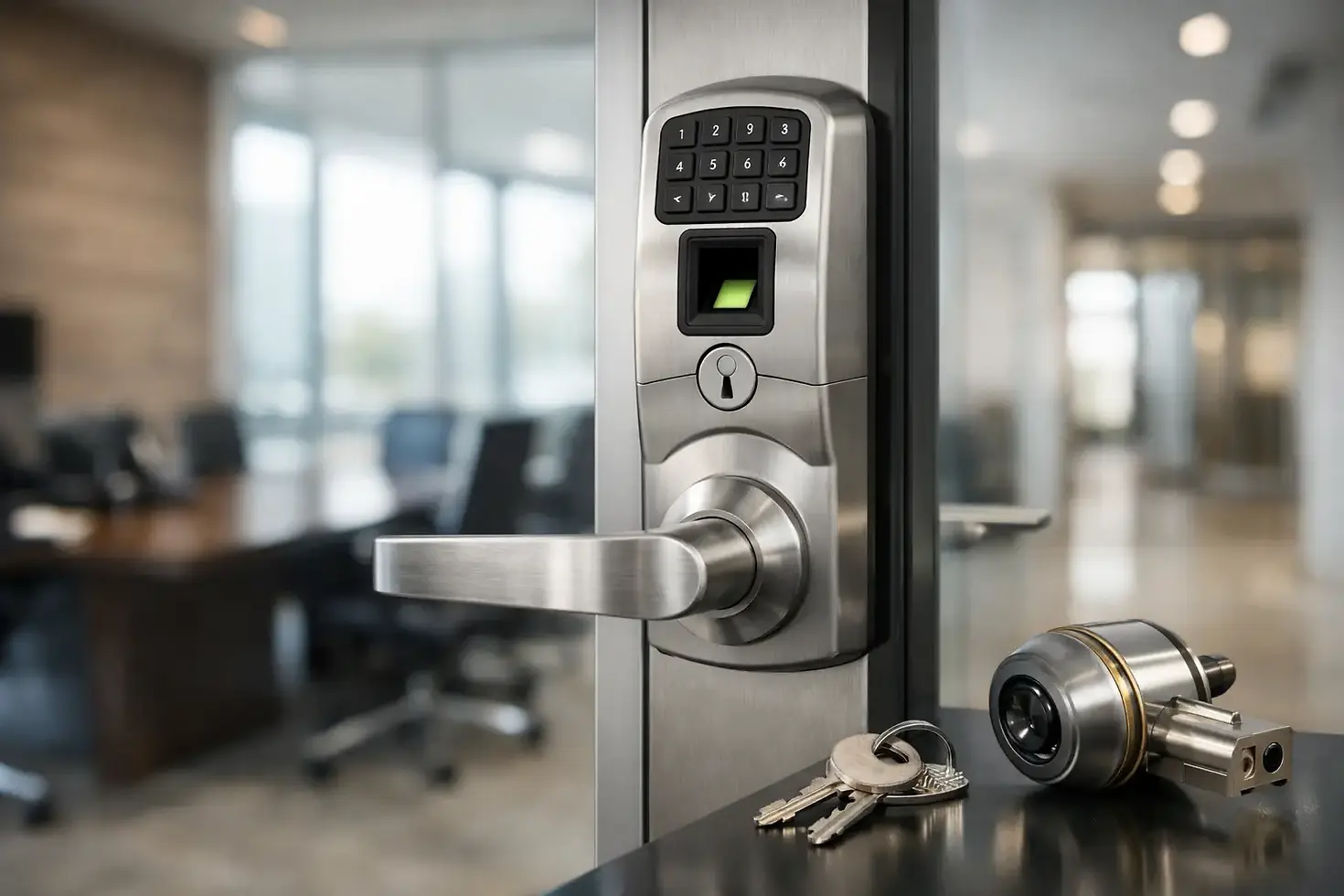
Keypad and electronic keypad locks replace physical key access with a code. They are a strong option when multiple employees need entry but you do not want to collect keys every time someone leaves.
The main advantage is speed. When an employee is dismissed or no longer needs access, you can remove or change their code instead of rekeying the entire door. Many models allow separate user codes, making it easier to identify who should have access and when.
These systems are not automatically the right answer for every business. Battery-powered locks need routine battery changes, and staff need clear instructions not to share codes. On a high-traffic public entrance, a keypad may not be the best fit. On an employee-only door, office suite, supply room, or side entrance, it can be a practical upgrade.
Choose hardware designed for commercial use. A basic residential keypad lock may not stand up to a busy business entrance or provide the right emergency-exit function.
Use Panic Hardware Where Safe Exit Is Required
Panic bars, also called exit devices, allow people to open an exit door quickly by pushing a bar or pad. They are common on buildings with public occupancy, larger employee counts, or doors that serve as designated exits.
The purpose is simple: people should be able to get out without searching for a key, turning a lock, or using special knowledge. The outside trim can still be secured to prevent unauthorized entry, while the inside remains available for emergency exit.
Panic hardware is not just about compliance. It also helps during a real emergency, when people may be moving quickly and visibility may be poor. If your exit door has a makeshift lock, a broken bar, or hardware that is hard to operate, it deserves prompt attention.
Because requirements can vary by building type and local code, have a qualified professional assess the door before changing exit hardware. Security should never come at the cost of a safe way out.
Add Door Closers and Latch Protection
Some of the most useful commercial security upgrades are not locks at all. A door closer makes sure the door shuts behind each person who enters or exits. Without it, a locked door can be left standing open by accident, especially during deliveries or busy work periods.
A properly adjusted closer should close the door firmly enough to latch without slamming. If it shuts too slowly, the door may remain open. If it slams, it can damage the frame, hardware, and door over time.
Latch guards and similar protective hardware can help on certain outward-swinging doors by covering the gap near the latch. They are often considered for rear doors, service entrances, and other areas where a person could try to manipulate the latch from outside. Their value depends on the door design, so proper fit is essential.
Consider Access Control When You Need Accountability
For businesses with higher security needs, electronic access control can provide more than a key or code. Card, fob, mobile credential, or managed access systems can record entry events and let an authorized manager add or remove users without changing physical locks.
This is useful when you need to know who entered a supply room, office, equipment area, or restricted section of a building. It can also reduce the headache of recovering keys from employees, contractors, and vendors.
The trade-off is cost and complexity. Access control systems require appropriate hardware, power planning, setup, and ongoing administration. For a single-door business with a small staff, rekeying and a commercial keypad may be enough. For a larger operation with several doors and frequent staffing changes, access control can save time and improve accountability.
When to Upgrade Right Away
Do not wait for a break-in to address a known weak point. Commercial door lock upgrades should move to the top of the list when keys are missing, an employee with access leaves under difficult circumstances, locks are visibly damaged, or the door no longer latches reliably.
Other warning signs include a lock that turns loosely, a key that works only after repeated attempts, a door that must be lifted or pulled to lock, or an exit device that sticks. These are not minor inconveniences after business hours. They can leave your property vulnerable or create a safety problem for employees.
For businesses in Crestview and surrounding communities, ASAP Locksmith can provide on-site commercial rekeying, lock repair, and practical security upgrades when access needs to change quickly. The goal is not to sell more hardware than you need. It is to restore control of your doors and get your business secured with as little disruption as possible.
A good commercial lock upgrade should make closing time less uncertain. If you are wondering who still has a key, whether the back door actually latched, or whether employees can exit safely, that is a good time to have the door checked before the problem becomes urgent.


Comments