
_edited.png)

Best Employee Key Control Practices for Business
A missing key is not always a lockout problem. For a business, it can be a security problem that stays hidden until inventory goes missing, a restricted area is entered, or a former employee returns after hours. The best employee key control practices give owners and managers a clear answer to a basic question: who has access to what, and do they still need it?
For a small office, shop, restaurant, warehouse, or rental property, key control does not need to be complicated. It does need to be consistent. A few practical rules can reduce confusion, protect employees, and make staff changes much less stressful.
Start With a Clear Key Inventory
You cannot control keys you have not counted. Begin by gathering every business key, including office keys, exterior door keys, mailbox keys, storage room keys, alarm-panel keys, gate keys, equipment keys, and keys kept in desk drawers or vehicles.
Create a simple record that identifies each key by a number or label, not just by its appearance. Record the door or item it opens, the type of key, how many copies exist, and who currently has each copy. Avoid writing the exact door name directly on a key tag. If a key ring is lost, a label that says “rear cash office” gives the finder far too much information.
A spreadsheet may be enough for a small operation. What matters is that one manager owns the record and updates it right away. A list that is only updated once a year will not help when a key goes missing on Friday afternoon.
Give Access Based on Job Need
Not every employee needs every key. A cashier may need access to the front door and register area, while a maintenance worker may need access to utility spaces and exterior gates. A manager may need a master key, but that should be the exception, not the default.
The safest approach is to issue the lowest level of access that allows someone to do their job. This limits the impact if a key is lost, copied without permission, or not returned after employment ends.
Think through access by role rather than handing out keys because someone has been with the company for a long time. Seniority is not the same as operational need. If an employee changes positions, review their keys at the same time you update their duties.
Keep Master Keys Tightly Controlled
Master keys are convenient, especially in offices, apartment buildings, medical facilities, and properties with several storage areas. They also create the largest security risk because one key can open multiple doors.
Keep master keys with a limited number of trusted supervisors. Document every person who receives one and require it to be returned when they leave, transfer roles, take extended leave, or no longer need broad access. Never leave master keys in an unlocked drawer, on a hook behind the counter, or inside a company vehicle overnight.
For some businesses, a master key system is worth the investment because it keeps access organized. For others, especially a very small location with only a few doors, separate restricted keys may offer better control. The right setup depends on the size of the property, the number of employees, and the areas that need protection.
Use a Written Key Check-Out Process
Keys should be issued like company equipment. Before an employee receives one, have them sign a short key agreement stating which key or key ring they received, that it remains company property, and that it cannot be copied, loaned out, or labeled with the business address.
The agreement should also explain what happens if a key is lost. Employees need to know they should report the loss immediately, even if they think the key might turn up. Waiting to report it because it is embarrassing can leave your business exposed.
When keys are returned, inspect the key ring and mark the return date in your log. Do not accept “I left it on the desk” as confirmation. The key should be physically in the hands of the person responsible for key control.
A formal process also protects good employees. It eliminates arguments over whether a key was issued, returned, or misplaced and gives everyone the same expectations.
Store Spare Keys in One Secure Place
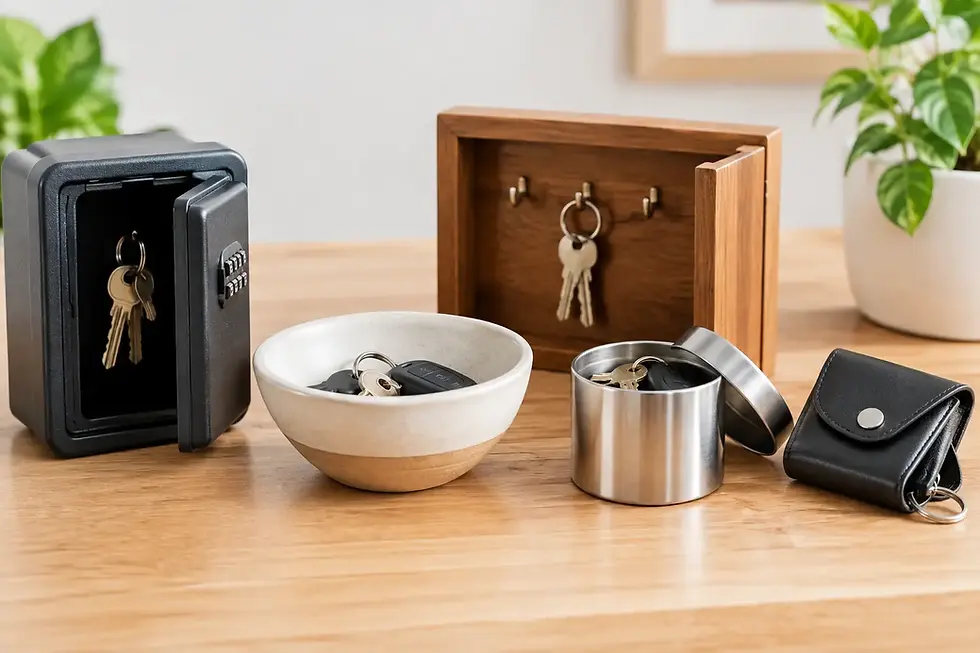
A hidden key under a mat, above a door frame, or behind a dumpster is not a backup plan. It is an invitation. Spare keys should be kept in a locked key cabinet, a secured office safe, or another controlled location that is not accessible to every employee.
The cabinet itself should have limited access, and each removal should be recorded. For a business with frequent shift changes, a key cabinet with numbered hooks can make it easier to see when something is missing. For a property with many doors, an electronic key management cabinet may be worth considering because it can track who removed a key and when.
Low-tech systems can work well when they are managed carefully. High-tech systems can be useful when many people need access. Neither system will solve poor habits on its own.
Set Rules for Lost, Stolen, and Unreturned Keys
Every business should decide in advance how it will handle a missing key. The response should depend on what the key opens and whether it can be connected to your location.
If a clearly labeled exterior key disappears, rekeying may be the safest choice. If a generic interior key is missing and there is no reason to believe it was taken, the risk may be lower. Still, document the incident and make a practical decision quickly. Waiting for certainty can leave a door vulnerable longer than necessary.
Unreturned keys require the same attention. When an employee leaves under normal circumstances and returns all keys, your existing locks may remain suitable. When a dismissal is sudden, a dispute is involved, or a key cannot be accounted for, rekeying affected doors is often the better move. Rekeying changes the lock so old keys no longer work, without necessarily replacing the entire hardware.
For urgent staffing changes, a local commercial locksmith can rekey doors, assess weak points in the access plan, and provide new keys for the employees who still need them. This is especially useful when the business cannot afford to close or wait days to restore security.
Make Offboarding a Security Step, Not an Afterthought
Employee separation is one of the most important moments for key control. Add key return to the same checklist used for uniforms, company devices, ID badges, passwords, and final paperwork.
Collect keys before the employee leaves the building whenever possible. Confirm the return against the key log, not from memory. If the employee had access to a master key, alarm key, gate key, or sensitive storage area, notify the person responsible for facility security right away.
Sometimes an employee may have made an unauthorized copy. You cannot always know that for certain, which is why rekeying after a high-risk departure is a practical safeguard. It is not about accusing someone. It is about making sure your business controls who can enter after the employment relationship ends.
Review Your System Before It Fails
A quick key audit every three to six months catches problems while they are still manageable. Compare issued keys with your written log, look for keys assigned to former employees, inspect the spare-key cabinet, and make sure employees understand the reporting process.
This review is also a good time to inspect the locks themselves. A key control policy cannot make a worn lock, loose strike plate, or damaged door frame secure. If keys have been copied repeatedly over the years or too many former employees may still have access, rekeying can give the business a clean start without replacing every lock.
Employee key control is not about making work difficult. It is about preventing one small, overlooked key from becoming an expensive disruption. Keep the records current, limit access to what each person truly needs, and act promptly when a key cannot be accounted for. For Crestview-area businesses facing a sudden staff change or a missing key, ASAP Locksmith can help restore control with professional commercial rekeying and dependable on-site service.


Comments