
_edited.png)

Business Keyholder Access Guide for Local Owners
A key passed to the wrong person, an ex-employee who still has access, or a manager who cannot open before the morning shift can stop business fast. This business keyholder access guide helps local owners set practical rules for who holds keys, what those keys open, and what to do when access needs to change.
For a small business, key control is often handled informally. A spare key sits in a desk drawer. A trusted employee has a copy. A former manager may still have a key months after leaving. That approach can work until it does not. Clear access procedures protect your staff, inventory, equipment, records, and ability to open on time.
Start With a Clear Keyholder List
Every business should know exactly who has a key. Not who probably has one. Not who had one last year. Make a current written list with each keyholder's name, role, phone number, the date the key was issued, and the doors or areas that key opens.
Keep the list with the owner, general manager, or another person who is responsible for security decisions. If you manage several locations, keep a separate record for each address. A key for the front door is not the same as a key for a supply room, office, gate, or storage building.
Limit full-building keys to people who genuinely need them. Many businesses are better served by giving shift leads access to the front entrance while keeping offices, cash areas, stockrooms, and restricted spaces on separate keys. It takes a little more planning, but it reduces the damage one lost key can cause.
Choose Keyholders Based on Responsibility
A keyholder should be dependable, reachable, and authorized to make decisions during an emergency. This person may need to respond to an alarm, a break-in, a water leak, a failed lock, or an employee who cannot get into the building.
Avoid issuing keys just because someone has worked for you a long time or asked for convenience. Access should match the job. A cleaner may need after-hours entry but not a master key. A delivery coordinator may need a loading entrance but not access to an office or safe area.
It also helps to name a primary keyholder and at least one backup. If your only keyholder is out sick, on vacation, or unreachable during a late-night alarm call, your business can be left waiting outside.
Build a Business Keyholder Access Policy
A short written policy prevents confusion. It does not need to read like a legal document. It should state that company keys remain company property, cannot be copied without approval, and must be returned immediately when a role changes or employment ends.
Ask each keyholder to sign that they received a specific key and understand the rules. This is not about treating good employees with suspicion. It gives everyone a clear process and makes a difficult access change easier when it is necessary.
Your policy should cover these points:
Who can approve a new key or authorize a duplicate.
Which doors, rooms, gates, or cabinets each keyholder can access.
Where spare keys are stored and who can retrieve them.
How lost, stolen, or damaged keys must be reported.
What happens to keys when an employee is terminated, resigns, transfers, or goes on extended leave.
Review the policy when you add employees, move locations, install new doors, or change operating hours. A restaurant opening earlier for prep staff, for example, may need a different access plan than it did when only managers arrived before opening.
Keep Spare Keys Secure, Not Convenient
A spare key is useful when a manager is locked out or an employee forgets a key. It becomes a security problem when it is hidden under a mat, taped inside a utility box, or left in an unlocked office drawer.
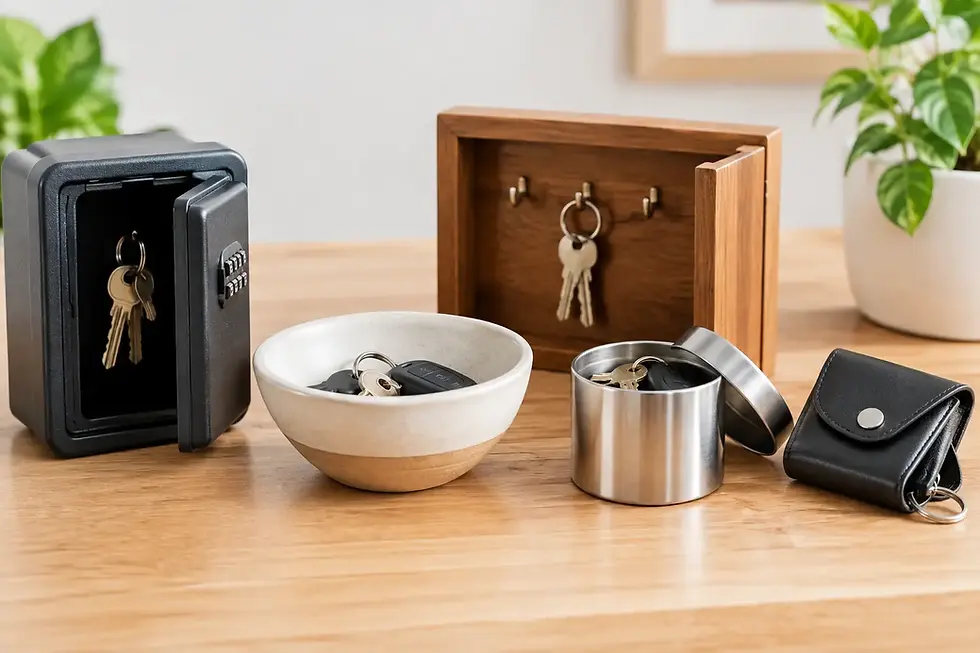
Store spare keys in a secure key cabinet or locked safe. Record who removes a spare and when it is returned. If you use an exterior lockbox, choose its location carefully and change the code whenever a person with access leaves the business. An exterior lockbox may be practical for a low-risk service entrance, but it may not be the right choice for every business.
For businesses with more staff or multiple restricted areas, a numbered key system can help. The number identifies the key in your records without labeling the key itself with the business name or address. If a key is dropped in a parking lot, you do not want it to advertise where it belongs.
Handle Lost Keys and Staff Changes Right Away
When a key goes missing, the first question is not whether the employee thinks it will turn up. The question is what that key can open and what risk it creates. A lost key to a break room may call for a different response than a lost key to the front door, office, inventory room, or exterior gate.
If the key was connected to a bag theft, vehicle break-in, conflict with a former employee, or any situation where the business address may be known, act quickly. Rekeying lets a locksmith change the lock pins so old keys no longer work. In many cases, it is faster and less expensive than replacing all the lock hardware.
Employee dismissals require the same speed. Collect keys, key cards, alarm fobs, garage remotes, and access codes before the person leaves whenever possible. If there is any doubt that all keys were returned, schedule a rekey as soon as the transition is complete. Waiting to see whether a problem develops puts the business in a weak position.
For urgent commercial rekeying in Crestview and nearby communities, ASAP Locksmith can change access without unnecessary disruption. The goal is simple: former keys stop working, authorized staff keep moving, and the building stays protected.
Know When Rekeying Is Enough
Rekeying is a strong option when your existing locks are in good condition and you need to cancel old keys. It is especially useful after turnover, missing keys, contractor access, or a management change. You receive new keys, while anyone holding an old key loses entry.
Lock replacement may be the better call when hardware is worn, damaged, loose, difficult to operate, or no longer suited to the door. A commercial door that does not latch correctly can create both a security issue and a daily frustration for staff. If the lock has been forced or a break-in attempt damaged the door frame, a locksmith should inspect the full setup, not just the key cylinder.
The right answer depends on the condition of the hardware and how much access needs to change. A professional can explain the options clearly instead of pushing work you do not need.
Plan for Opening, Closing, and Emergencies
Keyholder access is not only about preventing unauthorized entry. It also helps your team operate safely each day. Opening staff should know how to enter without propping doors open, where to park when arriving early, and what to do if the lock, alarm, or entry door does not work as expected.
Closing staff should confirm exterior doors are secured, restricted areas are locked, and keys are not left behind on counters or desks. If keys are handed from one shift to another, make that handoff deliberate. A quick verbal assumption can leave a key missing until the next morning.
For emergencies, decide who gets called first, second, and third. Keep those numbers current. Consider what happens if a keyholder is out of town, a storm closes roads, or a lock fails before business hours. A simple backup plan can prevent an expensive lost day of operations.
Review Access Before It Becomes a Problem
Set a schedule to review keyholder access at least twice a year. Compare your list against current employees, managers, vendors, and tenants. Check whether spare keys are accounted for and whether locks still work properly. This is also a good time to remove access that was granted for a temporary project but never taken back.
The best key control system is one your team will actually follow. Keep it simple, limit access to what each person needs, and deal with lost keys or staffing changes immediately. A few clear rules now can save your business from a locked-out morning or a much bigger security problem later.


Comments