
_edited.png)

How to Protect Business Keys and Control Access
A business key can look harmless sitting on a counter, in a desk drawer, or on a former employee’s key ring. But one missing key can give the wrong person access to your office, shop, storage area, equipment room, or rental property. Knowing how to protect business keys starts with treating every key as part of your security plan, not just a convenience for opening the door.
For many small businesses, the biggest risk is not a dramatic break-in. It is a key that was copied without permission, never returned after a job ended, or handed around so often that nobody knows who has it. A few simple controls can prevent that problem without making daily work harder for your team.
Start With Clear Rules for Business Keys
Every business should know which keys exist, what each one opens, and who is authorized to carry it. This is especially important if your building has a front entrance, back door, office doors, supply rooms, gates, filing cabinets, or separate tenant spaces.
Avoid giving out keys casually. A spare key may seem useful when a worker forgets theirs, but it should still be assigned to a specific person and documented. If a key is passed from one employee to another without a record, you lose control of access fast.
Set a simple policy: keys are issued for work use, they cannot be copied without approval, and they must be returned immediately when employment or a contract ends. Put the policy in writing so there is no confusion later. The goal is not to distrust good employees. It is to make access clear and protect everyone involved.
Limit Access to What Each Person Needs
Not every employee needs a key to every door. A cashier may need access to the front entrance, while a manager may need access to the office, safe area, stockroom, and rear exit. A maintenance contractor may need access only during scheduled service hours.
When you limit key access by job role, a lost key creates less exposure. It also makes it easier to identify which locks need attention if a key goes missing.
This approach can take some planning if you operate from a larger building or manage several properties. Still, it is usually easier than dealing with an unauthorized entry after the fact. For businesses with several doors, a locksmith can help organize the locks into a practical key system that balances convenience and security.
Store Spare Keys Where They Cannot Walk Away
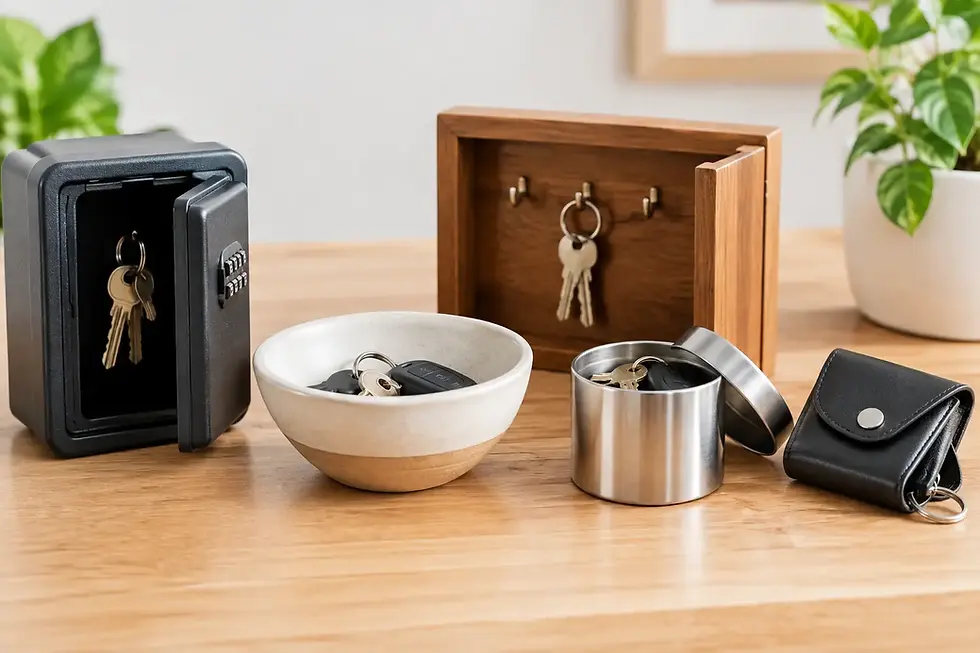
A hidden key under a mat, above a door frame, or inside an unlocked desk is not a backup plan. It is an invitation. Store spare business keys in a locked cabinet, lockbox, or secure key control box located away from public areas.
Only a small number of trusted managers should have access to the spare-key storage. Keep the cabinet key separate from the keys it protects. If they are stored together, the cabinet adds very little security.
Be careful with key tags, too. A tag that says “Back Door,” “Office,” or includes your business name gives a finder useful information. Use an internal code that only authorized staff can understand. Keep the code list in a secure location, not taped inside the key cabinet.
For businesses that keep vehicle, gate, or equipment keys on-site, the same rule applies. A visible hook by the front counter may be convenient, but it gives visitors, vendors, and anyone passing through a clear view of what is available.
Keep a Simple Key Log
You do not need a complicated system to track keys. A basic log can work well for many local businesses. Record the key number or code, the doors it opens, the employee or contractor assigned to it, the date issued, and the date returned.
Review the log when staffing changes, when keys are replaced, and when you move into a new building. If you manage a busy office, rental units, or multiple crews, consider using a numbered key cabinet and matching sign-out sheet. The right method depends on the size of your operation, but every business should be able to answer one question quickly: who has this key right now?
A key log also helps when a key is reported lost. Instead of guessing which doors might be affected, you can identify the exact key and make a faster decision about rekeying.
Rekey Quickly After Employee Changes
One of the most important parts of how to protect business keys is responding promptly when an employee, tenant, vendor, or contractor no longer needs access. If a key holder is terminated, dismissed, or leaves under difficult circumstances, waiting weeks to address the locks leaves your business exposed.
Rekeying is often the practical answer. A locksmith changes the lock’s internal pins so old keys no longer work, while allowing you to use new keys. In many cases, this is less expensive than replacing every lock, especially when the existing hardware is in good condition.
Replacing locks may make more sense if the hardware is worn out, damaged, outdated, or does not provide the level of security your business needs. The choice depends on the condition of the locks and the access setup you want going forward.
Do not forget about less obvious access points. Check exterior doors, rear entrances, storage buildings, gates, mailbox locks, utility rooms, and any shared office or warehouse spaces. A front-door rekey does not help much if an old key still opens the back entrance.
Use Master Keys Carefully
A master key system can make daily operations easier. It allows managers to access multiple areas while employees use keys limited to their own work spaces. For a business with offices, storage rooms, or several units, that can reduce the number of keys you need to carry and manage.
The trade-off is simple: a lost master key can affect more doors than a standard key. Keep master keys in the hands of a very limited number of trusted people, mark them discreetly, and track them closely. Never treat a master key like a spare key.
If you are unsure whether your current locks can be organized into a master key system, a commercial locksmith can inspect the hardware and explain the options. The best setup is one that gives staff the access they need without giving everyone full access to the building.
Know What to Do When a Key Is Lost or Stolen
A missing key does not always mean someone plans to use it. It may have been dropped in a parking lot, left at a job site, or accidentally taken home. But you should still act as if the key could reach the wrong hands.
First, identify what the key opens and whether it has any label that connects it to your business. Then check your key log to determine who had it last and whether the key provided access to sensitive areas. If the key cannot be found quickly, rekey the affected locks.
Act faster when the key was lost with an employee badge, business documents, an address, or a marked tag. The more information attached to the key, the greater the risk. For urgent commercial rekeying in Crestview and surrounding areas, ASAP Locksmith can help restore control of your access without unnecessary disruption to your workday.
A key system works best when it is reviewed before there is a problem. Take a few minutes this week to check your spare keys, confirm who has access, and decide who can authorize a rekey if a key goes missing. If you find an unaccounted-for key, treat that as your signal to act now, not later.


Comments